




The zero waste movement is becoming increasingly relevant in Lithuania, especially since separate textile waste collection became mandatory on January 1, 2025. Nevertheless, a significant amount of textiles was still found in mixed municipal waste in the autumn of 2025—approximately 31.2 kg, according to waste composition studies. These figures may indicate a gap between declared environmental goals and actual consumption and waste-sorting habits.
In practice, this means that residents need to adapt to the new textile collection container network, learn how to sort textiles properly, discover zero waste stores in Vilnius and other cities, and more frequently choose bulk shopping. At the same time, businesses are facing increasing pressure due to the direction of the EU Textile Strategy and the ESPR Regulation, which focus on improving product sustainability and restricting the destruction of unsold textile products.
The sections below provide an overview of where to find package-free stores in Lithuania, how to properly sort plastic and textile waste, which reusable solutions are worth adopting in everyday life, and why second-hand consumption is now often considered one of the most realistic ways to reduce waste generation.
What is zero waste and what does it mean in Lithuania?
Zero waste is a lifestyle principle aimed at minimizing the amount of waste sent to landfills by following the 5R hierarchy: Refuse, Reduce, Reuse, Recycle, and Rot (compost).
In Lithuanian households, these principles can be applied in practical ways. Refuse means declining promotional leaflets and single-use shopping bags at stores. Reduce involves more conscious consumption—buying only what is genuinely needed.
Reuse is the principle of choosing reusable items, such as water bottles, cloth shopping bags, or second-hand clothing instead of buying new products. Recycle refers to sorting waste into the appropriate containers according to Lithuania’s waste management system, while Rot means composting food waste in a garden compost bin or in a brown organic waste container.
The movement has become more visible in Lithuania over the past decade. The “Zero Waste Lietuva” Facebook community brings together more than 1,000 members who share tips and practical experience. Since 2019, Zero Waste Fest events have been held at Inovatorių Slėnis, bringing together people interested in environmental issues for discussions and workshops.
According to data from the Ministry of Environment, nearly 6,000 tonnes of textile waste were collected separately in Lithuania in 2024, compared with approximately 3,500 tonnes in 2022. This increase is likely linked to preparations for new requirements: from January 1, 2025, separate textile waste collection became mandatory, meaning municipalities must ensure that residents have access to textile sorting facilities.
Why choose a zero waste lifestyle in Lithuania?
For many people in Lithuania, a zero waste lifestyle can offer practical benefits for three main reasons: reducing environmental impact, saving money, and reinforcing cultural habits that are already familiar to part of society in everyday life.
Let’s start with the numbers. In 2022, the EU-27 countries generated approximately 6.94 million tonnes of textile waste—an average of around 16 kg per person per year (European Environment Agency, 2024). Of this amount, only about 4.6 kg per person is collected separately, while the remainder ends up in mixed waste. The textile collection rate in the EU remains relatively low.
An even sharper contrast can be seen on the production side. According to various estimates, between 4% and 9% of new clothing placed on the EU market may be destroyed without ever being worn, amounting to approximately 264,000–594,000 tonnes per year (EEA, 2024).
The ESPR Regulation is focused on more sustainable product management and introduces restrictions on the destruction of unsold textile products by large companies. As a result, second-hand consumption is increasingly regarded as one of the most important tools for reducing textile waste streams today.
Is it worth waiting for legislation to force changes in the market when consumers can start making a difference tomorrow?
From an economic perspective, zero waste practices often make sense as well. Bulk shopping is frequently less expensive than buying packaged products, while reusable alternatives can pay for themselves within a few months. A menstrual cup can replace the need for several years’ worth of disposable products, and a reusable razor with replaceable blades often costs less in the long run than disposable alternatives.
Culturally, the foundation for this already exists. Many Lithuanians value a clean environment, and community clean-up events as well as environmental topics in schools have become common practice. As a result, zero waste principles often do not feel unfamiliar, but rather resemble a natural continuation of habits that were common in the past.
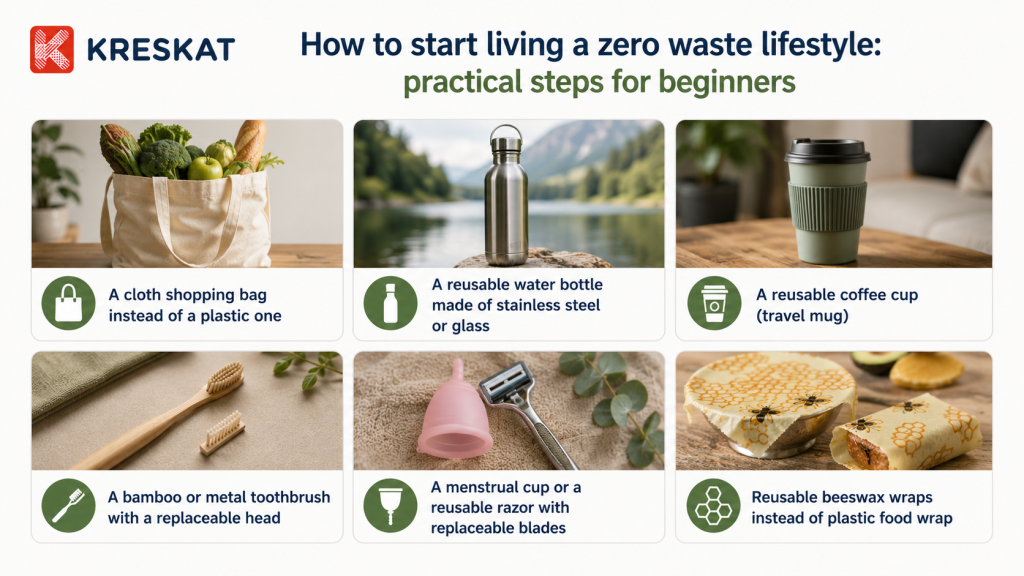
How to start living a zero waste lifestyle: practical steps for beginners
It is best to start not by completely reorganizing your household, but by introducing a few simple reusable alternatives that can be adopted within a single week. This approach is often more effective, as small habits generally become established more easily than radical changes.
The first changes worth making include:
- A cloth shopping bag instead of a plastic one—it’s worth keeping one in your backpack or car at all times.
- A reusable water bottle made of stainless steel or glass, which can replace single-use plastic water bottles.
- A reusable coffee cup (travel mug), accepted by many cafés.
- A bamboo or metal toothbrush with a replaceable head.
- A menstrual cup or a reusable razor with replaceable blades, which often help reduce costs over time.
- Reusable beeswax wraps instead of plastic food wrap.
A lesser-known zero waste solution is that some petrol stations and cafés in Lithuania offer a discount of around €0.40 to customers who bring their own cup. Many consumers are still unaware of this, and therefore often pay the full price for coffee served in a disposable cup.
The most important principle is progress, not perfection. There is no need to aim for zero waste immediately; the key is to change habits consistently, month by month.
It is worth organizing your wardrobe in two stages. First, identify the clothes you actually wear and separate the items that have remained unused for a long time. Garments that are still in good condition but are no longer worn can be placed in textile collection containers or donated to second-hand stores and charitable organizations.
A new wardrobe can also be supplemented with second-hand clothing, which is often regarded as one of the most practical ways to reduce the amount of textile waste.
Zero waste stores in Lithuania: where can you shop without packaging?
There are several specialized zero waste stores in Vilnius and other major cities in Lithuania, as well as online platforms that offer delivery throughout the country.
The main options include package-free stores, second-hand clothing shops, and suppliers of second-hand textiles. Such a network makes it possible to choose solutions tailored to both everyday consumer needs and business requirements.
Zero waste stores in Vilnius
Zero waste stores in Vilnius typically offer three main product categories: bulk foods, reusable household items, and more environmentally friendly hygiene products. Customers can purchase grains, nuts, dried fruits, oils, vinegars, and liquid cleaning products by weight. The assortment is often complemented by bamboo toothbrushes, beeswax wraps, solid shampoos, and menstrual cups.
The practical shopping process is simple: bring your own containers—such as jars, bottles, or cloth bags—weigh them at the checkout or self-service scales, and then fill them with the desired amount of product. The cashier deducts the weight of the empty container, so you pay only for the product itself.
The second-hand clothing sector in Vilnius is also an important part of the zero waste ecosystem. Second-hand consumption is often regarded as one of the most practical ways to reduce textile waste, as it extends a garment’s lifespan without the need for new production.
Online stores and wholesale suppliers across Lithuania
Online stores with delivery throughout Lithuania are often the most practical solution for residents of smaller towns, where physical zero waste stores are still limited in number.
Alongside the consumer segment, there are also wholesale suppliers of second-hand and stock clothing, serving resale stores, vintage clothing shops, and social initiatives. This is an important part of the zero waste supply chain, as it helps return large volumes of textiles back into circulation.
Stock clothing represents a separate category—these are new, never-worn garments originating from unsold collections. Their resale is considered one of the alternatives to the destruction of unsold textiles, a practice that EU regulation aims to restrict in large companies over the coming years.
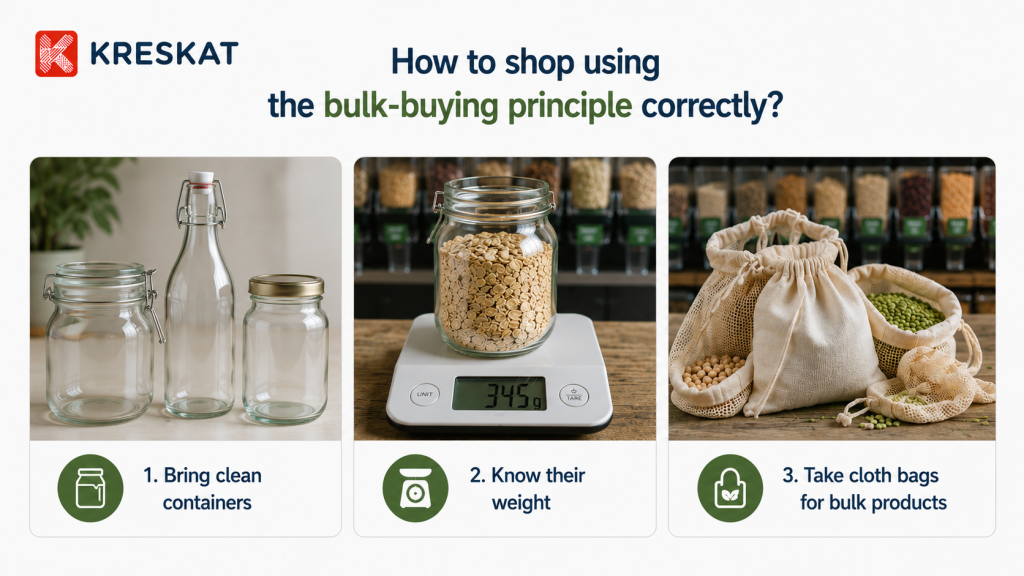
How to shop using the bulk-buying principle correctly?
Shopping by weight requires only minimal preparation at home: bring clean containers, know their weight, and take cloth bags for bulk products.
Jars are suitable for oils, vinegar, and liquid cleaning products, while lightweight cotton bags work well for grains, nuts, and dried fruits. Each container should be weighed separately before filling, as the cashier or system deducts the weight of the empty container from the total weight.
Some large supermarket chains have already introduced self-service refill stations for grains and nuts, equipped with integrated scales and label printers. This simplifies the process and makes it possible to shop by weight even without access to a specialized zero waste store.
Plastic, textile, and waste sorting in Lithuania: what is really happening?
Official recycling rates sometimes generate debate, as a significant share of waste still ends up in mixed municipal waste or is exported for further processing. Consumer communities, including Reddit discussions and LRT podcasts, have also expressed skepticism regarding publicly reported plastic recycling rates, including estimates of around 75%.
The deposit return system has proven to be the most reliable waste collection mechanism in Lithuania. Introduced in 2016, it covers PET bottles, glass containers, and metal cans marked with the “Deposit” (Užstatas) symbol. These containers are typically returned through the collection system, and the return rate exceeds 90%.
This is considered one of the most effective waste collection channels, where the collection of packaging and its subsequent processing are monitored in the clearest and most controlled manner.
All other packaging that is not covered by the deposit return system enters a less transparent recycling chain. Sauce bottles, plastic films, biscuit boxes, yogurt containers, and composite packaging are often sorted into mixed packaging waste containers, but their recycling potential depends on factors such as contamination levels, material composition, and the state of the secondary raw materials market.
The situation with textiles is even more complex. In the autumn of 2025, approximately 31.2 kg of textiles was recorded in mixed municipal waste—one of the highest figures observed during the monitoring period. Even after the introduction of separate textile collection, a large proportion of clothing still ends up in landfills or in the mixed waste stream.
From January 1, 2025, separate textile waste collection has been mandatory in Lithuania. The Ministry of Environment has established minimum requirements for the placement of textile collection containers: in smaller settlements, there is generally a requirement for at least one container per a specified number of residents, while in more densely populated urban areas, container density may vary according to municipal decisions.
Additionally, the Ministry of Environment has announced plans to invest in the expansion of textile recycling capacities.
The practical conclusion is simple: sorting waste alone does not solve the waste problem. More significant impact is usually achieved through reducing consumption and reusing products, which is why buying second-hand clothing is considered one of the more effective ways to reduce textile waste at its source.
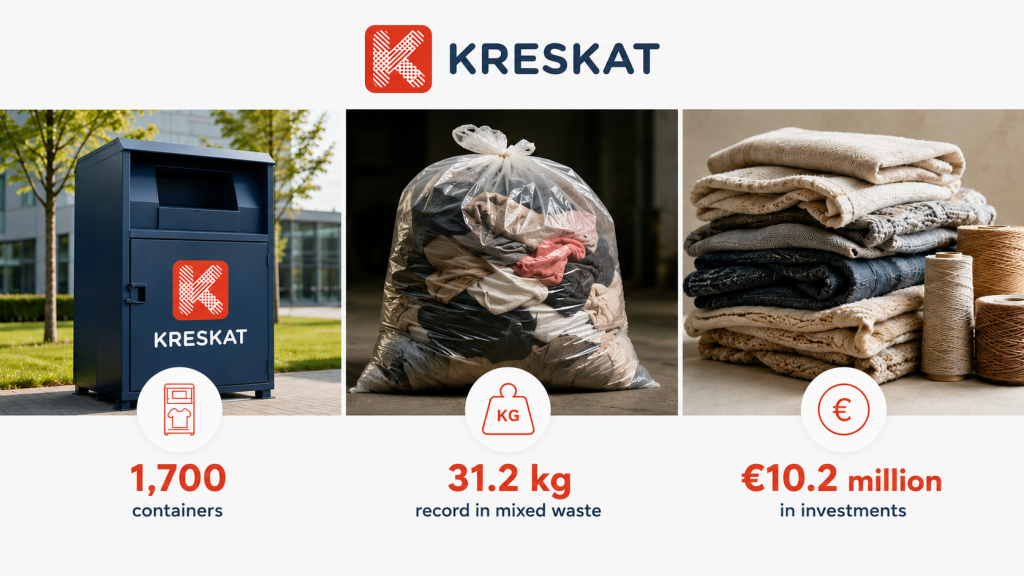
Textile waste sorting in Lithuania 2025: 1,700 containers, a 31.2 kg record in mixed waste, and €10.2 million in investments – key statistics
Zero Waste in Lithuania: Frequently Asked Questions
Is plastic actually recycled in Lithuania?
Some plastic is recycled in Lithuania, but the transparency of the mixed packaging waste stream is often viewed more critically than that of the deposit return system. Experts and consumers have repeatedly raised questions in LRT podcasts and public discussions about how much of materials such as plastic films, sauce bottles, and biscuit boxes is actually recycled.
The most reliable channel is the deposit return system, which has been operating since 2016. PET bottles, glass containers, and metal cans marked with the “Deposit” (Užstatas) symbol are typically collected successfully and returned to the recycling or reuse chain.
The practical conclusion is simple: it is worth focusing not only on waste sorting, but also on waste reduction and the use of reusable products.
How should textile waste be sorted under the new requirements?
From January 1, 2025, textile waste in Lithuania must be collected separately from mixed municipal waste. The network of special textile collection containers is being expanded across municipalities.
Before disposing of clothing, it is worth considering second-hand use options—such as donating, exchanging, or selling the items. Second-hand use is generally considered a priority over recycling, as a garment retains a greater portion of its original value and often does not require an additional recycling process.
It is recommended that only textiles that are no longer suitable for wearing, reusing, or repairing be placed in a textile collection container.
How can you start a zero waste lifestyle without having much time or money?
It is worth starting with three simple changes: a cloth shopping bag, a reusable water bottle, and a reusable coffee cup. Some of these items are often already available at home, so getting started does not necessarily require any additional spending.
Reusable products can often help reduce expenses over time. A menstrual cup can replace a large number of disposable products, while a razor with replaceable blades often costs less than disposable alternatives.
The most important principle is progress, not perfection. Every habit you change—from using a reusable coffee cup to choosing second-hand clothing—can help reduce waste.
Second-hand clothing consumption is considered one of the more effective zero waste practices, as it can help reduce the amount of textile waste generated in Lithuania. For this reason, the second-hand and stock clothing market is becoming an important part of more sustainable consumption, helping many garments be reused instead of entering the waste stream.
Kreskat, a company with more than 20 years of experience in wholesale clothing trade, helps give a second life to approximately 200 tonnes of clothing every month. If you are looking for a reliable supplier for your business or would like to contribute to the principles of the circular economy, explore the stock clothing assortment and choose solutions that can help reduce textile waste in Lithuania.