




Sustainable business in Lithuania has ceased to be a marketing choice and has become a regulatory requirement that affects companies’ access to financing, public procurement opportunities, and B2B supply chains. The Law on Corporate and Group Reporting, which entered into force on 1 July 2024, transposed the EU Corporate Sustainability Reporting Directive (CSRD) into national legislation, with the requirements being introduced in phases for the country’s largest companies.
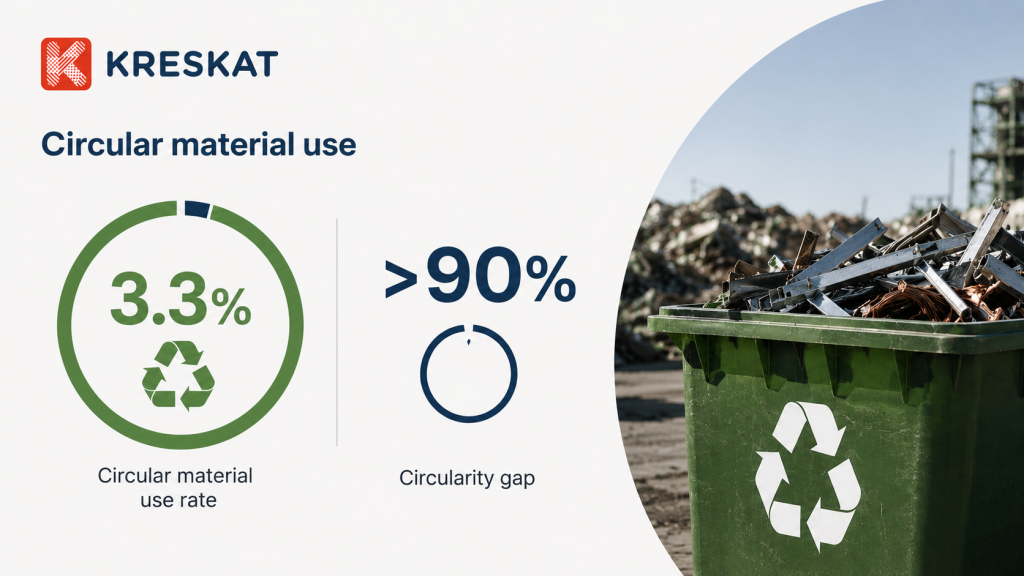
At the same time, Lithuania’s circular material use rate stands at around 3.3%, while its consumption footprint is approximately 30 tonnes of materials per person per year—almost twice as high as in the Netherlands. This creates a significant gap between the actual structure of the economy and the expectations of EU policies, financial institutions, and an increasing number of B2B clients.
The following sections explain the ESG pillars, the financial returns of sustainability initiatives, practical steps for getting started, CSRD requirements for businesses in Lithuania, and the greenwashing risks that should be avoided when making sustainability-related claims.
What Is a Sustainable Business? Definition and Concept
A sustainable business is a company that balances economic performance, environmental protection, and social responsibility in its operations according to ESG (Environmental, Social, and Governance) principles. In practice, this means creating long-term value without depleting natural or human resources beyond their capacity to regenerate.
In practice, this includes decisions that affect not only quarterly results, but also supply chain resilience, employee well-being, and environmental impact over the long term.
These terms are often used interchangeably, so it is worth distinguishing between them:
- Sustainable business – the broadest ESG-related concept, encompassing environmental protection, social responsibility, and corporate governance.
- Responsible business – a term often associated with a company’s voluntary commitments to society and its employees.
- Eco-friendly business – a narrower concept focused primarily on environmental issues, which does not necessarily include social or governance aspects.
In the Lithuanian context, sustainability is becoming a practical necessity. According to an analysis by the Ministry of the Economy and Innovation, the country’s circular material use rate is around 3.3%, while the circularity gap exceeds 90%. This means that only a small proportion of the materials entering the economy are returned to circulation after use.
The main national institution shaping sustainability standards within the business community in Lithuania is LAVA (the Lithuanian Responsible Business Association), established in 2013. The association brings together companies that integrate sustainable development principles into their operations and publish public sustainability reports, making its recommendations a common reference point for businesses across Lithuania.
Sustainability Pillars in Business and ESG Principles
The ESG framework is now one of the leading standards for evaluating sustainability, used by investors, banks, and regulators to assess a company’s long-term value. Its three pillars—Environmental, Social, and Governance—form a comprehensive evaluation system that also underpins CSRD reporting requirements.
The Environmental (E) pillar covers CO₂ emissions, carbon footprint measurement, the share of renewable energy, waste reduction, water consumption, and the implementation of circular economy principles. This is often the easiest area to quantify and measure, which is why it frequently becomes the first step in a company’s sustainability strategy.
The Social (S) pillar evaluates employee well-being, diversity and inclusion, fair working conditions throughout the supply chain, contributions to local communities, and the protection of customer rights. This pillar is becoming increasingly important due to the growing focus on talent attraction and retention, as well as the sustainability requirements that many B2B customers place on their suppliers.
The Governance (G) pillar covers transparent management structures, codes of ethics, anti-corruption policies, shareholder rights protection, and data governance. Without strong governance, the other two pillars cannot be reliably documented or monitored, which is why Governance serves as the foundation of the entire ESG framework.
In practice, people often refer to four types of sustainability, adding economic sustainability to the ESG framework. This dimension focuses on the viability of the business model and long-term financial stability. Such an expanded model highlights an important reality: sustainability is difficult to maintain over the long term without a profitable and financially resilient business model.
Companies typically begin with the pillar that is most relevant to their industry. Manufacturers often focus first on the Environmental (E) pillar, as energy use and waste generation represent a significant share of both their costs and environmental impact. Service and retail companies, on the other hand, frequently prioritize the Social (S) pillar, since their value is largely created through employees and customer relationships.
Benefits of Sustainable Business and Competitive Advantages
Sustainability delivers tangible financial returns, not just a stronger brand image. Companies that systematically implement ESG principles often reduce costs, gain access to new markets, and find it easier to secure financing.
Cost reduction is often the sustainability measure that delivers the fastest return on investment. Energy efficiency, reduced raw material consumption, and effective waste management have a direct impact on profit margins. Some studies indicate that investments in pollution reduction can generate a high return on investment (ROI), which is why many small and medium-sized enterprises (SMEs) choose to start their sustainability journey in this area.
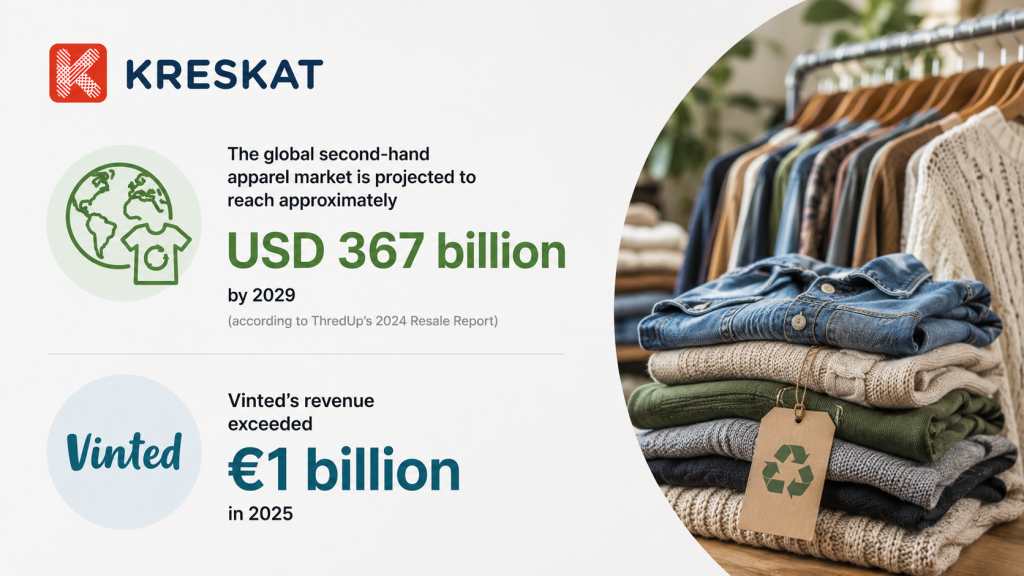
New market opportunities are emerging through the circular economy. The global second-hand apparel market is projected to reach approximately USD 367 billion by 2029 (according to ThredUp’s 2024 Resale Report), while Vinted’s revenue exceeded €1 billion in 2025. Resale and secondary markets are becoming increasingly important channels rather than remaining niche alternatives.
Suppliers of second-hand and deadstock (“stock”) clothing, such as Kreskat and its second-hand clothing assortment, are directly part of the circular economy direction, for which EU funding and priority public procurement may be available.
Investor and banking requirements are changing rapidly. ESG reporting is becoming an increasingly common requirement for obtaining EU funding or green loans, meaning that companies without sustainability data may find themselves in a less favorable position in the financing market.
Talent attraction is another practical benefit. Younger generations of employees often choose employers based on their values, meaning that a sustainability strategy can also serve as a tool in the labor market.
Pressure in the B2B supply chain is increasing on multiple levels. Large clients that fall under CSRD requirements are beginning to request sustainability data from their suppliers. A supplier that can document a circular origin or a lower carbon footprint may gain a competitive advantage over those that are unable to provide such data.
How to Start a Sustainable Business: Practical Steps
Implementing sustainability begins not with a strategy document, but with an audit of current operations. Without a clear starting point, it is difficult to measure progress or substantiate sustainability claims to customers and regulators.
Step 1: Impact Assessment. Measure your current carbon footprint, energy consumption, waste streams, and supply chain composition. These four indicators often form the foundation of future ESG reporting.
Step 2: Choose a Priority Area. SMEs typically achieve the fastest ROI from energy-efficiency measures (such as LED lighting, heat pumps, and building insulation) or waste reduction initiatives, as these can lower monthly operating costs within 1–3 years.
Step 3. Set Measurable Goals Using the SMART Framework. A specific goal, such as reducing electricity consumption by 20% within two years, makes it possible to track progress and later document the results in a sustainability report.
Step 4: Review Your Supply Chain. Give preference to local suppliers, secondary raw materials, and certified partners. In the clothing sector, circular sources, such as wholesale second-hand clothing, can directly reduce the need for virgin raw materials.
Step 5: Documentation and Communication. Prepare the collected data for CSRD reporting and for B2B clients that fall within the scope of the directive themselves. Transparent documentation can become a sales advantage, not just a regulatory requirement.
Lithuanian SMEs have several practical resources that can help reduce initial investment costs:
- INVEGA financing instruments for green investments and energy-efficiency projects.
- Environmental Project Management Agency (APVA) programs supporting waste reduction and circular economy initiatives.
- LAVA membership, which provides access to sustainability self-assessment tools and a professional community.
- EU Structural Funds support for the green transition under the 2021–2027 programming period.
A practical tip for beginners: start with the measures that deliver a return first. Cost reduction is a tangible argument for management and shareholders, while environmental benefits often become a natural outcome of the same actions.
Is Sustainable Business Profitable? The Reality and the Risks of Greenwashing
The profitability of sustainability depends on the sector in which a company operates. Some areas can generate a quick financial return, while others require more time or may not pay off if they are based solely on marketing assumptions.
Works well: cost reduction through energy efficiency and waste management, circular economy business models, B2B sustainability services, and the trade of second-hand textiles and deadstock (“stock”) clothing. In 2025, Vinted reached approximately €10.8 billion in GMV and around €1.1 billion in revenue, demonstrating that the circular model is becoming an increasingly important sales channel.
Works less effectively: charging a premium price for “sustainable” products in the mass B2C market. Consumers’ stated attitudes often do not align with their actual purchasing behavior, especially when the price difference is significant.
Consumers are more willing to pay a premium only in certain categories, such as organic food, baby products, cosmetics, and the premium clothing segment. In other sectors, sustainability more often serves as a deciding factor when prices are similar, rather than as a justification for a higher price.
Greenwashing – the Greatest Reputational Risk
Unsubstantiated sustainability claims that are not supported by measurements or certifications can become a legal risk. The EU’s Green Claims Directive restricts the use of broad terms such as “eco,” “green,” or “natural” if they are not backed by documented evidence. The requirements of regulators and large B2B clients often align: they expect concrete data, not marketing slogans.
To avoid greenwashing, it is advisable to rely on recognized standards, such as ISO 14001 for environmental management, GOTS for textiles, and B Corp for comprehensive ESG assessment. It is also important to provide specific metrics, such as CO₂ reductions measured in tonnes or changes in waste streams expressed as percentages, and to document the entire supply chain, from raw material sourcing to the final product.
Would your business today have real data to substantiate its sustainability claims in front of a major B2B client or an auditor? If the answer is unclear, then an audit and measurement system should be the first priority, not communication.
CSRD and ESG Regulations: What Lithuanian Businesses Need to Know
On 1 July 2024, the Law on Corporate and Group Reporting entered into force in Lithuania, transposing the provisions of the EU Corporate Sustainability Reporting Directive (CSRD) into national legislation. Approximately 320 Lithuanian companies are expected to fall within the scope of these requirements and will be obliged to publicly report on their ESG impacts.
The implementation is taking place in three phases:
- Financial year 2024 – large public-interest entities with more than 500 employees.
- Financial year 2025 – other large companies based on turnover and balance sheet criteria.
- Financial year 2026 – small and medium-sized enterprises listed on stock exchanges.
The impact of the regulation extends beyond a formal list of requirements. Companies that fall within the scope of the CSRD must collect sustainability data from their suppliers, meaning that responsibility is transferred throughout the entire supply chain. Even SMEs that are not directly subject to the directive often receive requests to provide data on CO₂ emissions, material origins, or working conditions as a requirement for B2B cooperation or supplier qualification.
A sustainability report is becoming not only a regulatory document, but also a marketing tool. It can serve as supporting documentation that helps companies participate in public procurement procedures and tenders issued by large clients.
A concrete example from the textile sector: suppliers that can document and verify that their products are made using circular economy principles or secondary raw materials may have a clear competitive advantage. Secondary textiles are often presented as an example of circular economy practices in a buyer’s ESG reports and may therefore be considered a more attractive alternative to products made from virgin materials.
Frequently Asked Questions (FAQ)
What is the difference between a sustainable business and a socially responsible business?
A sustainable business encompasses the broader ESG framework—including environmental, social, and governance dimensions—whereas a socially responsible business has historically been a narrower concept, focused primarily on human and societal aspects.
In the Lithuanian context, these terms are often used interchangeably, particularly through the activities of LAVA and its approach to responsible business. However, in practice, they are not entirely synonymous.
ESG is a more modern and measurable evaluation framework used by investors, banks, and regulators, which is why it is becoming the dominant standard for assessing sustainability.
What Are the Four Types of Sustainability in Business?
The four types of sustainability are commonly defined as environmental, social, economic, and human sustainability. This model expands the standard three-dimensional ESG approach by incorporating additional aspects.
The difference from the ESG framework is that the four-type model separately identifies economic sustainability—the long-term viability of a business model—and human sustainability, which focuses on maintaining knowledge, skills, competencies, and employee well-being.
A Lithuanian example: a clothing wholesaler can meet all four types of sustainability by working with a product based on circular economy principles (E), ensuring fair working conditions throughout the supply chain (S), maintaining a profitable business model (Ec), and investing in employee training and development (H).
Are Consumers Really Willing to Pay More for Sustainable Products?
Most consumers say they care about sustainability, but actual purchasing behavior often tells a different story when the price difference becomes significant. In surveys, people express support for responsible consumption, but when making a purchase, price is usually the deciding factor.
Sustainability has a stronger influence in certain categories, including organic food products, second-hand clothing, cosmetics, and household appliances with energy-efficiency labels. For example, Vinted is one of the strongest second-hand clothing marketplaces in France in terms of sales volume.
The practical conclusion is simple: sustainability usually acts not as a price premium, but as an additional decision-making factor when prices are similar.
How Can You Start a Sustainable Business on a Small Budget?
Getting started can cost less than it may seem, especially if you begin by using free tools. LAVA’s self-assessment tools and the circularity calculators provided by the Ministry of Environment can help evaluate your current impact without incurring additional consulting costs.
Next, it is worth selecting one priority area. Energy-efficiency measures—such as LED lighting, insulation, or heat pumps—often help reduce costs more quickly and can therefore be well suited to SMEs with limited capital.
Investments can be supported through INVEGA financing instruments and the green funding programs of the Environmental Project Management Agency (APVA). An alternative approach may be a circular economy business model: deadstock products, secondary raw materials, or second-hand clothing assortments often require lower initial investments, while the secondary market segment is growing faster than the primary market in some categories.
Lithuania’s circular material use rate currently stands at around 3.3%, while the second-hand clothing market is growing faster than the primary market in many regions. For businesses looking to establish a position in this segment, a reliable supplier can become an important competitive advantage.
KRESKAT has been supplying partners with deadstock clothing and second-hand textiles for more than 20 years, giving approximately 200 tonnes of clothing a second life every month.
If you are building a business aligned with CSRD requirements and circular economy principles, it is worth starting with an assortment that is already part of a circular supply stream. Explore our second-hand clothing offering and benefit from the experience that helps clients stand out in the rapidly growing secondary fashion market.